
Service
Energy Audit & OSE
Chilled water plant efficiency measured against achievable benchmarks.
View service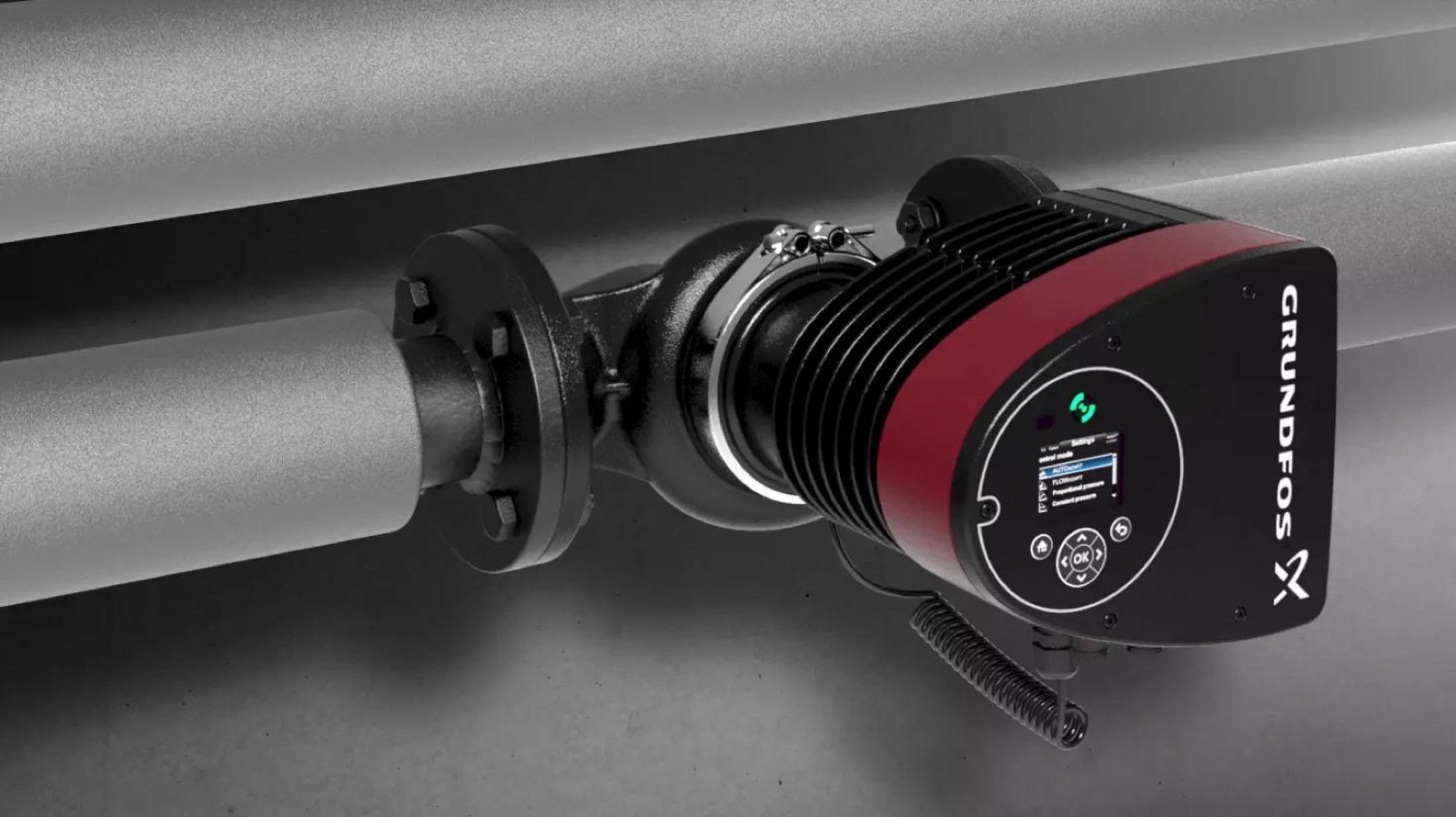

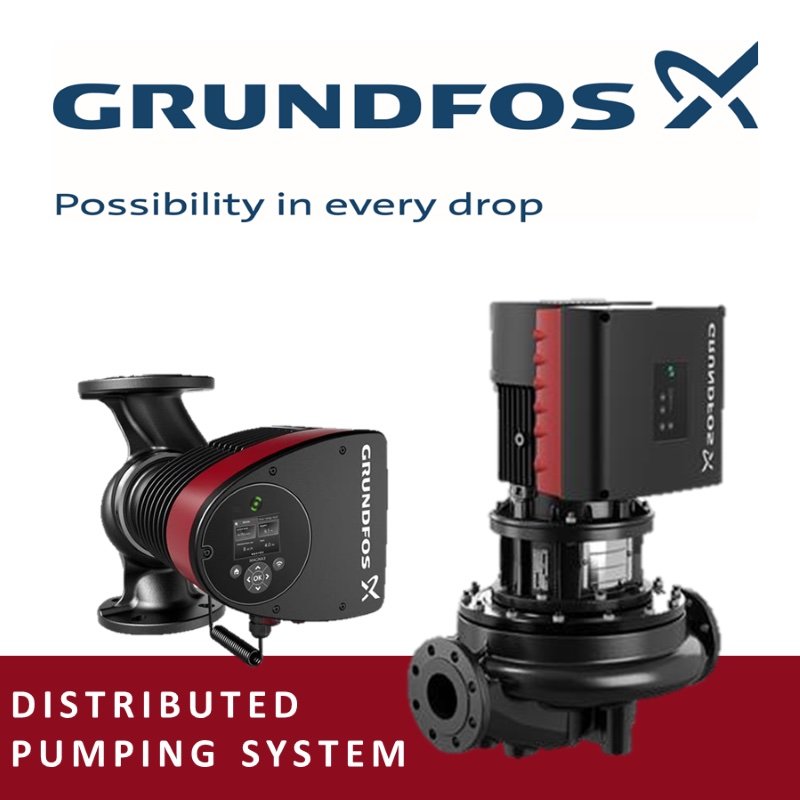
Grundfos Distributed Pumping uses intelligent MAGNA3 and TPE/TPE3 pumps to deliver the right chilled-water flow and pressure to where it is needed, reducing energy use while maintaining comfort.
Conventional chilled-water systems use central pumps to generate enough pressure for the most demanding circuit. Control and balancing valves then remove the excess pressure at individual terminal units.
Grundfos Distributed Pumping moves pressure generation closer to the cooling load. Intelligent MAGNA3 and TPE/TPE3 pumps are installed at or near the terminal circuits, supplying only the flow and pressure required by each zone or space to the equipment — AHU, PAHU, FCU or cooling coil.
Primary pumps circulate chilled water through the chiller and main distribution network while maintaining the required flow through the production side.
A MAGNA3 or TPE/TPE3 pump supplies each terminal circuit or group of terminal units. The pump generates only the pressure needed to overcome the actual pipe and coil resistance.
The pump's integrated variable-speed control adjusts the chilled-water flow according to temperature, differential temperature, differential pressure, an external setpoint or a BMS command, depending on the system design.
As cooling loads change, each pump continuously adjusts its speed. This keeps the system balanced without conventional control, balancing or pressure-independent control valves. Non-return valves prevent backflow when individual circuits are stopped.
Grundfos pumps coordinate chilled-water flow and pressure across the primary and secondary circuits, responding automatically to changing system demand. Select any drawing to open it at full size.
IWE coordinates the chiller, pumps and room terminals in real time to improve comfort, efficiency and reliability.
In a conventional system, the central pumps must generate sufficient pressure for the most hydraulically demanding circuit. Excess pressure at the other circuits is then throttled through control and balancing valves, wasting pumping energy.
Grundfos Distributed Pumping replaces these pressure-regulating valves with intelligent variable-speed pumps. Each pump produces only the head and flow required by its circuit. As building load and water flow decrease, pump speed and power consumption also reduce.
Actual savings depend on the system arrangement, operating profile, pump selection and commissioning. Full technical data is provided upon enquiry.
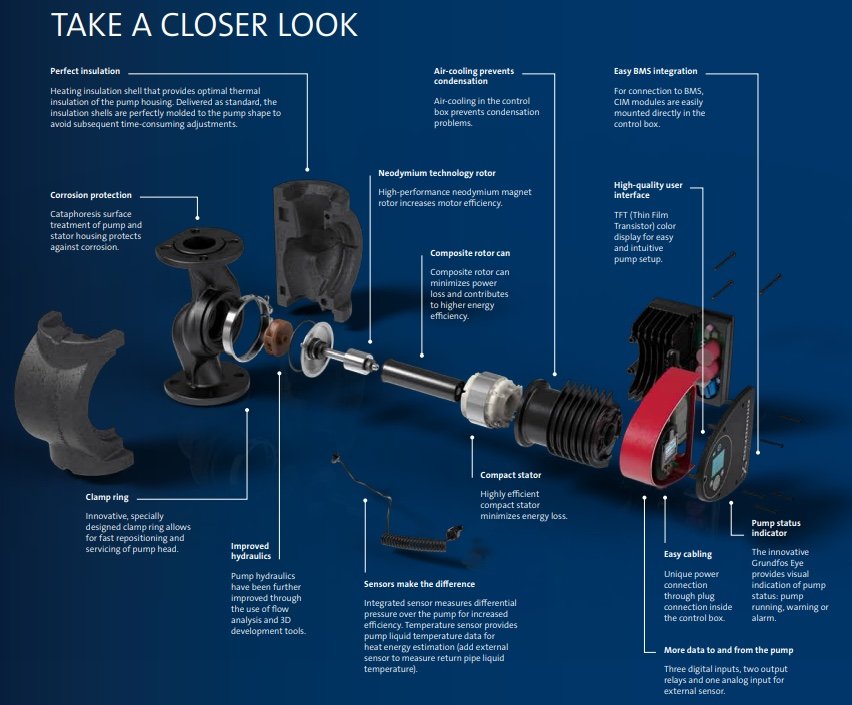
Grundfos Distributed Pumping is suitable for new and existing variable-load chilled-water systems where energy performance, hydronic balancing and indoor comfort are important.
Distributed pumps installed on riser, plant room and terminal circuits. Select any photograph to open it at full size.
Chilled water plant efficiency measured against achievable benchmarks.
View serviceThe manufacturer behind the MAGNA3 and TPE ranges, and how the partnership works.
View partnersSend us the circuit and the load profile, and we will size the pumps.
Talk to us